

What are we really doing when we let students opt out?
How low expectations protect adults and diminish children

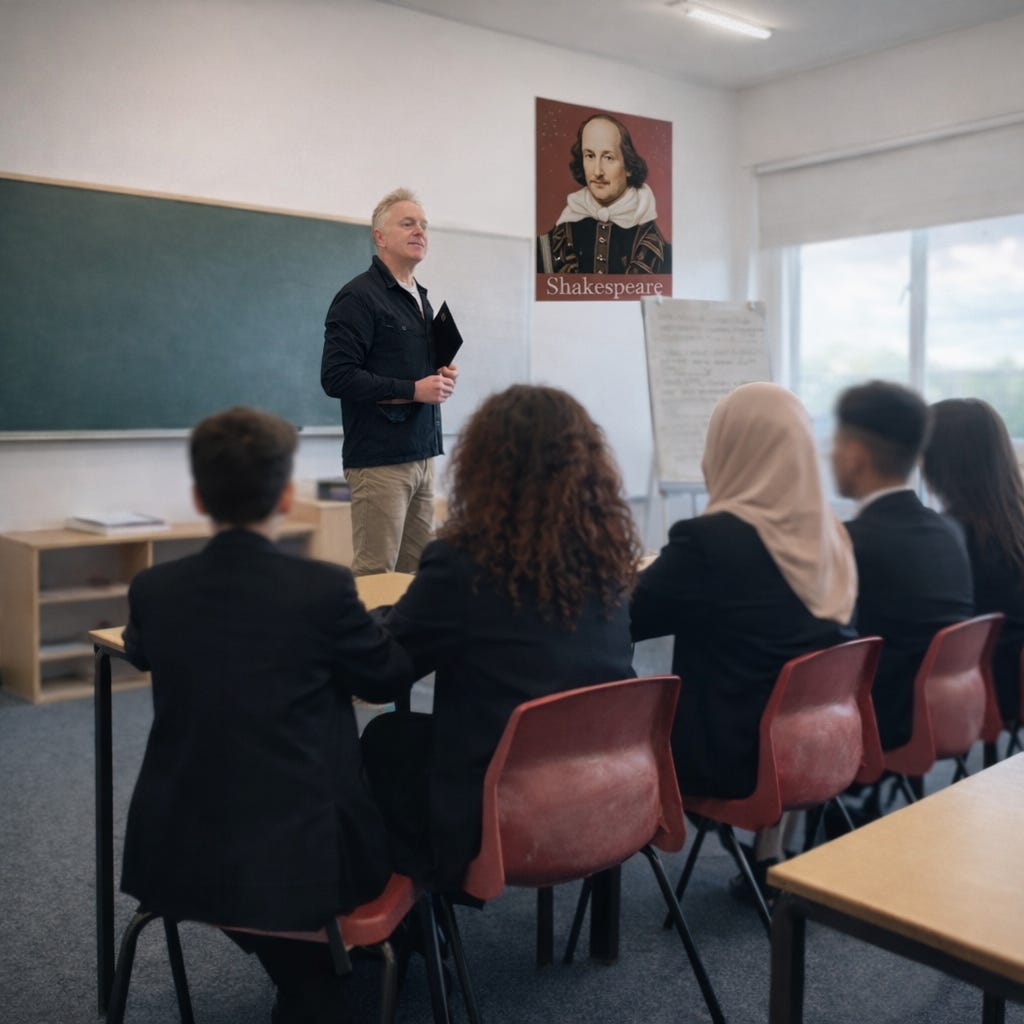
At researchED Birmingham taught a live Year 10 lesson on why Dickens wrote A Christmas Carol. The brief was to demonstrate how teachers can be sure all students are paying attention, understanding what has been taught and getting better at the skills they need to master.

The group were keen. They wanted to show what they knew about Victorian poverty, philanthropy, Dickens’ anger at social indifference. They leaned forward, were keen to speculate and revise their answers when challenged. It was, in many respects, too easy.
Except for one boy. He wasn’t disruptive but it was clear he didn’t really want to be there. When asked a question he muttered, “dunno,” or shrugged. When pressed, he looked at me with something close to panic. There was nothing aggressive or defiant in his attitude, he was just desperate for me to leave him alone.
In many of the schools I visit, there exists a wary ceasefire. Teachers know that if they don’t expect too much, students won’t give them a hard time; students know that as long as they’re not causing trouble, they will be left alone. Participation is optional, attention is aspirational and improvement becomes a distant dream. When that truce is disturbed, the reaction can be a kind of bewildered hostility. How dare you expect me to answer a question?1
It is entirely understandable that teachers take the path of least resistance. To insist feels like escalation. To push feels like bullying. There is a visceral discomfort in making a child feel uncomfortable. You can feel the eyes of the room on you. You can sense the temperature rise.
In the lesson I was teaching I was aware of my own discomfort. It would be so much easier to back off and just work with a coalition of the willing. To persevere in the teeth of discomfort is always the hardest option. Maybe if I hadn’t had a roomful of teachers watching I would have backed off. But, mindful of the fact that this was precisely the sort of scenario it’s so important to model, I chose to persevere.
Maybe because teachers have to deal with their own discomfort in these situations it’s all too easy to get sucked into a confrontation. We can so easily end up humiliating or cornering students, using our power and authority to bludgeon compliance out of them. This is, I think, almost always unintentional and I’ve definitely been there before myself. There is, of course, a better way.
By narrowing the demand, by asking clearer questions, by giving him and everyone else more time to think, by responding to “I don’t know” by saying he could listen to and repeat other students’ answers, by making it clear that not participating wasn’t an option and by praising effort, I stayed with him, refusing to collude with his withdrawal.
Gradually, his resistance wore away and by the end of the lesson he’d written something thoughtful about the tension between Malthusian ideas and the virtue of charity. It wasn’t miraculous, but it was evidence for both him and me that he could.
In the debrief session that followed the lesson, one of the observers said she had been struck by how I handled him. I asked how the audience felt during my exchanges with this student and it led to a conversation about how it feels to put a child in that position. The word “uncomfortable” came up more than once.
Of course it’s uncomfortable. Growth and progress often is.
The question is, what are we prioritising? The transient discomfort of having to participate in a lesson or the long-term discomfort of failure and alienation?
If I back off because I feel awkward, I’m protecting myself. If I back off because he looks distressed, I may believe I’m protecting him. But from what? From thinking? From the mild social risk of feeling exposed? From the effort required to retrieve and organise knowledge? From the possibility that he might achieve more than he believes himself capable of?
There are children for whom participation feels alien. If no one has insisted before, no one has shown them that they are capable of more, opting out becomes part of their identity. They are ‘the quiet one’ or ‘the difficult one,’ the one who ‘doesn’t do questions.’
Hey, teacher! Leave those kids alone!
It’s amazing how often adults collude in this. Parents contact schools with the request that their child not be asked questions in lessons or expected to do anything they might find uncomfortable. And even more staggering, instead of challenging these low expectations, school leaders agree!
Essentially, although of course unwittingly, parents are asking that their children learn less and school leaders are agreeing to teach less. Whose interest can this transaction be in? When we allow children’s identity as ‘non-participators’ to harden, we’re not being kind, we are consigning them to continual struggle and marginalisation. If we agree to “leave those kids alone” we are complicit in their diminishment.
Obviously, there should be no place in education for coldness, public shaming or zero tolerance theatrics. This is an argument for a different conception of care. If we really care for the children we teach, we should assume competence, refuse to collude with self-exclusion and understand that temporary discomfort in the service of learning is not traumatic.
Convenience over conviction
Too many decisions in schools are made not for the benefit of children but for the convenience of adults. This is just one example of where we misguidedly prioritise what’s expedient over what’s right.
We tell ourselves otherwise. We wrap our choices in the language of wellbeing, inclusion, pragmatism. We speak of de-escalation, of picking our battles. All of which sounds reasonable, might even be reasonable. But convenience has a way of dressing itself up as compassion.
Allowing a child to opt out is easier. It protects us from feeling like the villain in someone else’s story. It also protects us from the harder work of teaching those who most need us to teach them.
Insisting on participation means thinking carefully about how to secure everyone’s involvement. It means planning sharper questions, rehearsing explanations, anticipating misconceptions. It means building a culture in which attention is the norm and contribution is expected. It’s far simpler to accept the tacit deal: you don’t trouble me and I won’t trouble you.
Yet the cost of that deal is borne by the child who can least afford it.
Every time we choose expediency over expectation, we chip away at the central purpose of schooling. The point is not to maintain order or minimise discomfort but to extend what children know and can do.
There is a pattern here. We see it in policies softened to avoid complaint. In feedback diluted to avoid offence. In lessons engineered to keep everyone busy rather than ensure everyone learns. The through line is what’s easiest for adults.
Of course teachers are tired. Of course the job is hard. Of course there are moments when retreat feels rational. But if we’re honest, we must admit that many of the norms we tolerate persist because they make our lives smoother. What’s easiest is rarely what’s best.
The uncomfortable truth is that doing right by children requires us to endure discomfort ourselves. When we lower expectations to ease our own path, we should at least not fool ourselves into thinking we’re doing it for children’s benefit.
Insist with warmth
There are, of course, genuine complexities. Anxiety is real, as is prior failure. The fear of public error can be paralysing. The answer is not to bulldoze but to scaffold. To insist, but with warmth.
The coalition of the willing will always reward you. They smile, put up their hands to answer every question, and make you feel effective. It’s so tempting, so easy to align lessons to the ‘easy to teach’. But it’s the children who want to opt out who most need you to persist.
There is a peculiar cruelty in low expectations. It dresses itself up as sensitivity, whispers that some children are too fragile to be challenged, soothes our conscience while closing the door on the possibility of children becoming more confident and capable. We should always be wary of that insistent whisper.
If education is about increasing independence, then opting out cannot even be an acceptable resting state. Anything students do not internalise might as well not be taught. Anything never attempted can never be mastered.
Children don’t need rescuing from challenging lessons, they need rescuing from the story that they don’t take part.
If we persist, with warmth, clarity and high expectations, we do so in the knowledge that it won’t always feel good it will always be right.
NB - Four Dwellings Academy, the school the students I taught attend, is not at like this. Teachers have very high expectations of students and this is abundantly clear from the students’ wonderful attitude to learning. Obviously, as with any school, some students sometimes struggle but FDA do their utmost to meet every child’s needs and build their capacity.
When I retrieve my calling cards you often hear sighs of dread. I tell my students, “Would you prefer when your name comes up and I skip calling you thinking, “Nope, Bobby don’t know nuthin, let me call someone else?” You can almost see the mood change in the class when explained that way, and by the end of the year (and especially when these year 8’s reach high school) they appreciate what I do.
Thank you David. This struck a particular chord with me - you've given voice to many of the anxieties I've been feeling this week. Trying to maintain high expectations in an environment where they are not the norm is desperately hard, and desperately lonely. All too often, compromises are made in the pursuit of a 'quiet life' - but that's not what I came into education for.