

The blank page problem: creativity and the tyranny of choice
Why freedom stifles originality and imagination thrives inside boundaries

Freedom has never been a cause for much joy, it would seem.
Francesco Rocchi1
The more constraints one imposes, the more one frees oneself of the chains that shackle the spirit.
Igor Stravinsky, Poetics of Music
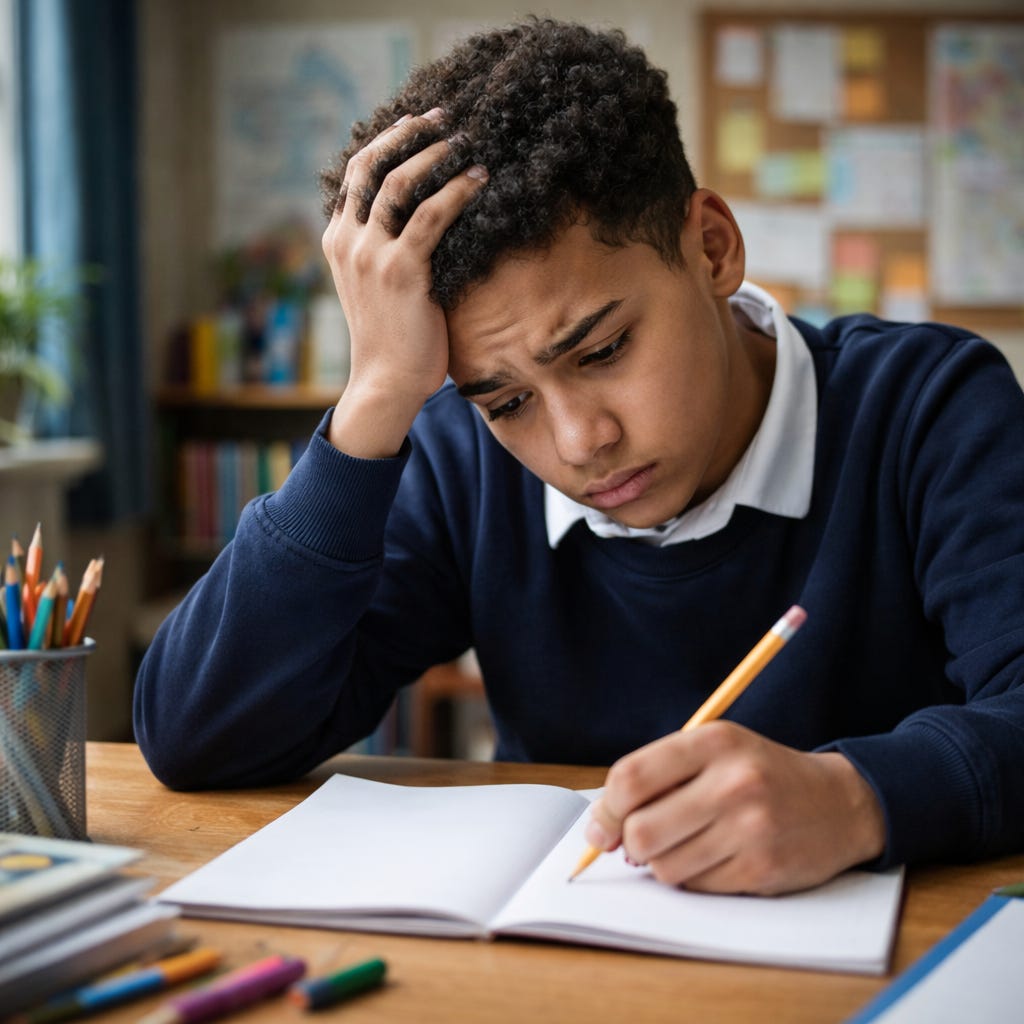
Faced with a blank page and told to “be creative”, many students freeze or revert to the safest pattern they know. Freedom becomes the freedom to fail.
If you’ve ever set children off on a task only to be confronted with a sea of raised hands and the complaint, “I don’t know how to start”, you’ll know the feeling. Students may be quite happy to talk about the topic when asked but the moment they’re required to pen to paper, the page exerts a peculiar pressure. With nothing to guide them, the range of possible beginnings feels overwhelming.
This is the blank page problem.
Writers know it well. As the journalist, Gene Fowler once put it, “Writing is easy. All you do is stare at a blank sheet of paper until drops of blood form on your forehead.” When the possibilities are unlimited, it becomes harder to choose.
Or, think about being confronted with a restaurant menu so long it feels like it should have a plot. Page after page of starters, soups, small plates, sharing plates, house specials, seasonal specials, chef’s specials; ten kinds of salad dressing; half a dozen breads; steak cooked five different ways; pasta in every imaginable shape and sauce; vegetarian options, vegan options, gluten free options, low carb options. And desserts that take another page entirely.
Endless variety is meaningless. Eventually, it becomes impossible to distinguish between one option and the next. What should be pleasurable becomes merely fatiguing. What, from a distance, looks like freedom begins to feel oppressive.
Psychologist, Barry Schwartz described this phenomenon as the “tyranny of freedom.” In a paper on self-determination, he argued that modern society often assumes that increasing choice automatically increases autonomy and satisfaction, yet psychological evidence suggests that when options proliferate beyond a manageable level, we become less decisive, more anxious about choosing poorly, and less satisfied with the outcomes we select. Beyond a certain point, the freedom to choose is burdensome.
The problem is cognitive. We have limited decision making capacity. Evaluating too many possibilities places unsustainable demands on working memory. We feel overwhelmed and instead of actually comparing options we either prevaricate or fall back on what’s most familiar. When there are many alternatives, every decision carries the shadow of the road not taken with every option appearing “just as fair.” If we select from, say, three options, it’s easily believe we’ve made a good choice. But choosing among thirty leads to to a type of FOMO, the fear we’ll miss out on something better if only we could properly evaluate the pros and cons of all the options available. Satisfaction declines as the potential for regret increases.
Schwartz also observes that abundant choice transfers responsibility from the provider to the chooser. When outcomes disappoint, there are no constraints to blame, no sense that our options were limited. With every possibility available, a poor outcome feels like a personal error. The result is greater anxiety before the decision and sharper self-reproach afterwards, a paradox in which, beyond a certain threshold, greater freedom produces paralysis, sterility and regret.
This paradox has striking parallels with research on creativity. In Creativity from Constraints: The Psychology of Breakthrough, the psychologist Patricia Stokes argues that creative work faces what she calls ‘the creativity problem.’ Creativity requires novelty, yet successful solutions tend to become habitual. When a strategy works, it is reinforced and repeated. Experts become extremely good at producing reliable responses, but what’s reliable is - de facto - unoriginal.
In Stokes’s model, constraints reshape the problem space within which thinking occurs, restricting the search for solutions in some directions while directing it in others.
Crucially, the constraints that promote creativity often come in pairs; one constraint precludes an existing solution, another promotes a new and often opposite one. Closing one of two doors forces the mind to explore the other:
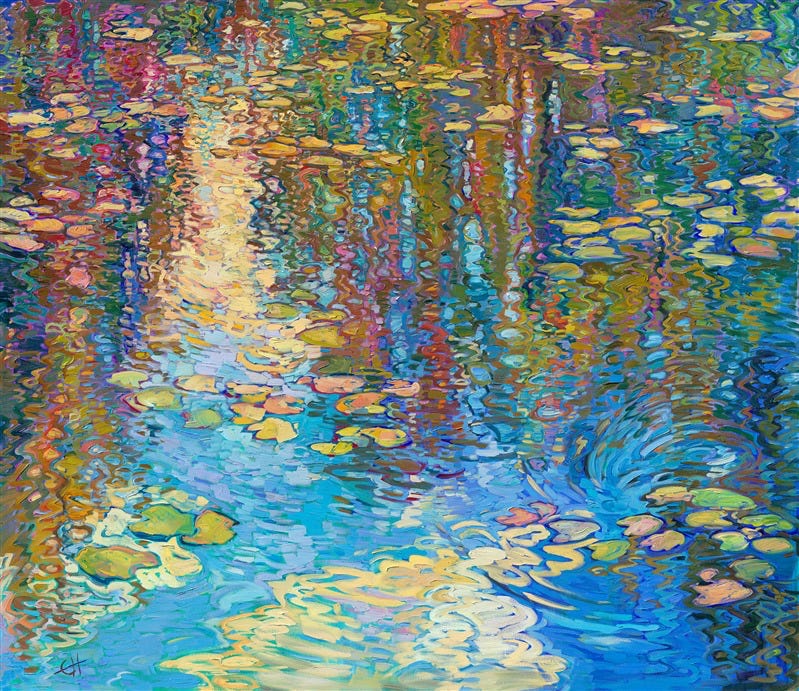
In Impressionist painting, artists effectively replaced one visual rule with another.
Preclude: dark–light modelling and sharply outlined forms used to create depth.
Promote: closely valued colours and visible brushstrokes that capture the effect of light on surfaces.
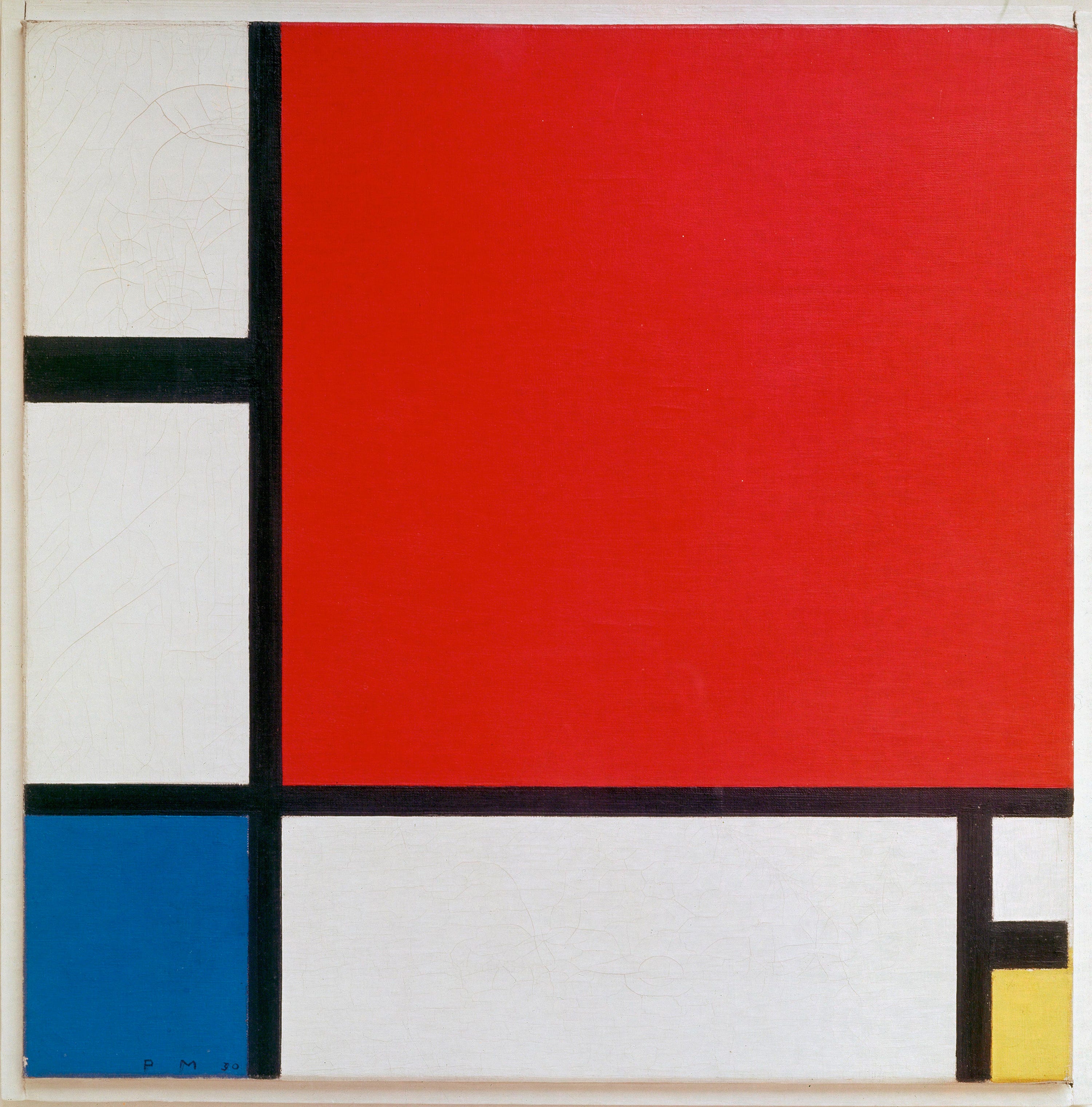
In Mondrian’s development toward abstraction, the shift is equally stark.
Preclude: representing particular objects in nature.
Promote: relationships between vertical and horizontal lines and planes of primary colour.
In sonnet writing, the constraint operates formally.
Preclude: unlimited length and loose structure.
Promote: fourteen lines, a fixed metre and a defined rhyme scheme that demand compression and ingenuity.
In jazz improvisation, freedom depends on a fixed framework.
Preclude: wandering freely through any chord sequence.
Promote: improvisation within a repeating twelve-bar harmonic pattern.
In each case the first constraint blocks a familiar response whilst the second creates a new problem to solve. A creative response is produced from the tension between what is forbidden and what is required.
As with selecting from a menu with too many options, when there are no constraints at all, we tend to repeat familiar solutions. The field of possibilities is so wide that we end up defaulting to what has worked before. Counterintuitively, freedom encourages imitation rather than invention, whereas restrictions have the capacity to generate extraordinary diversity of expression. Rather than suppressing it, constraints create a problem for our creativity to solve.
Experimental work supports the same conclusion. Research in creative cognition suggests that when people are given fewer options for constructing an invention, their ideas are often judged more original than when they are allowed to choose freely among many possibilities. In laboratory studies associated with the Geneplore model of creativity, developed by Ronald Finke, Thomas Ward and Steven Smith, participants were asked to invent new objects either from a fixed set of components or from freely chosen materials.2 Paradoxically, the inventions produced under constraint were typically judged more creative. The conclusion drawn was that restricting choice blocked conventional solutions and pushed participants toward more unusual ones.
There’s also evidence from research on ‘problem construction,’ the stage of creative thinking in which individuals define what the problem actually is. Michael Mumford and colleagues argue that creativity often depends less on solving problems than on how problems are framed in the first place. In their studies, participants were given ill-structured problems such as designing a programme, developing a product or addressing a social issue. Some participants were encouraged to analyse and redefine the problem by identifying constraints, goals and relevant factors before proposing solutions. Others moved directly to generating ideas.
The results were striking. Participants who spent time constructing the problem space tended to produce solutions that were judged more original and higher in quality. By specifying constraints and redefining the task, they avoided the most obvious solutions and explored a wider range of possibilities.3
Seen in this light, the tyranny of freedom and the psychology of creativity present different facets of the same phenomenon. Human thinking flourishes when our mental landscape is more structured.

